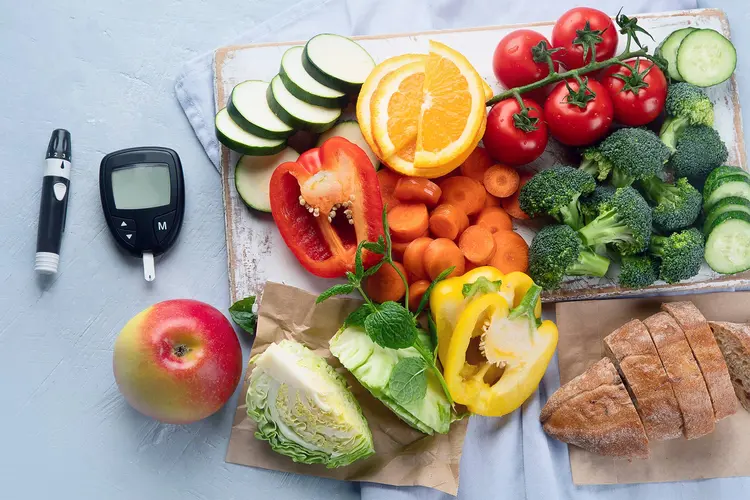
Walk into any Indian kitchen today, and you will find a jar of white crystal sugar. It is in our morning chai, our afternoon coffee, and our “traditional” sweetmeats. But there is a truth we must face about what we eat and how it connects to the rising tide of diabetes in India.
White crystal sugar was never part of our core culture. For thousands of years, India was a nation of Madhura (natural sweetness). Understanding what causes diabetes begins here — with the story of how a nation that once had medicinal wisdom about sweetness lost its way.
Our ancestors practiced what we might now call Metabolic Awareness. They understood something that modern diabetes management is only recently catching up to — that the body needs to change with the seasons, and that nutrition must follow.
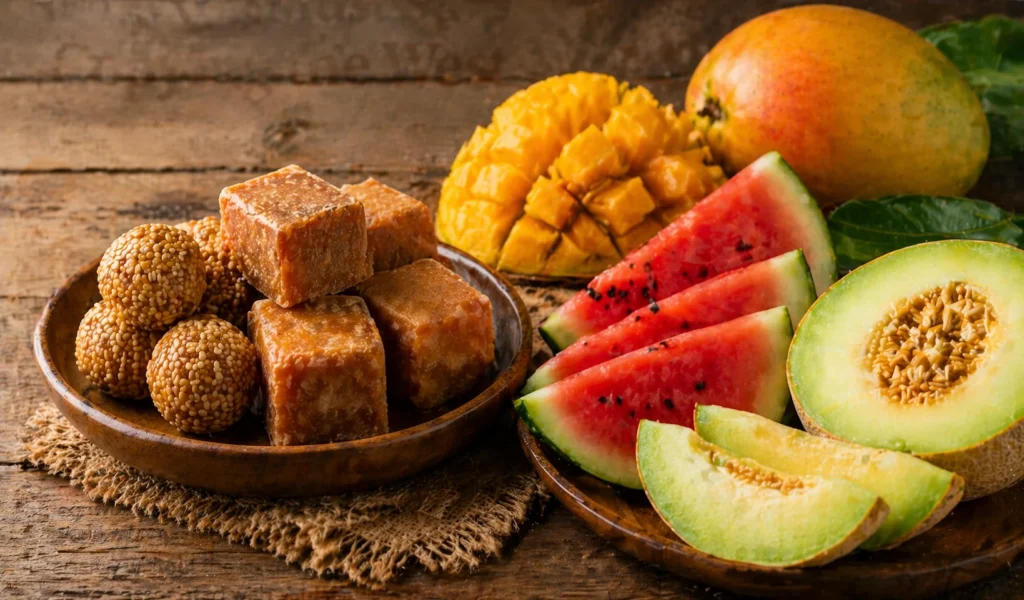
- Winter: Gur was paired with ginger or sesame to build immunity and steady energy — a practice that naturally supported healthy blood sugar levels through the cold months.
- Summer: Natural sweetness came from cooling, electrolyte-rich fruits like Mangoes and Melons. These provided energy without the insulin spikes associated with refined sugar and modern diabetes symptoms.
The idea of consuming the same refined white sugar every single day of the year is a modern habit that directly contradicts the ancient Indian wisdom of seasonal living. It is also, increasingly, one of the causes of diabetes in India.
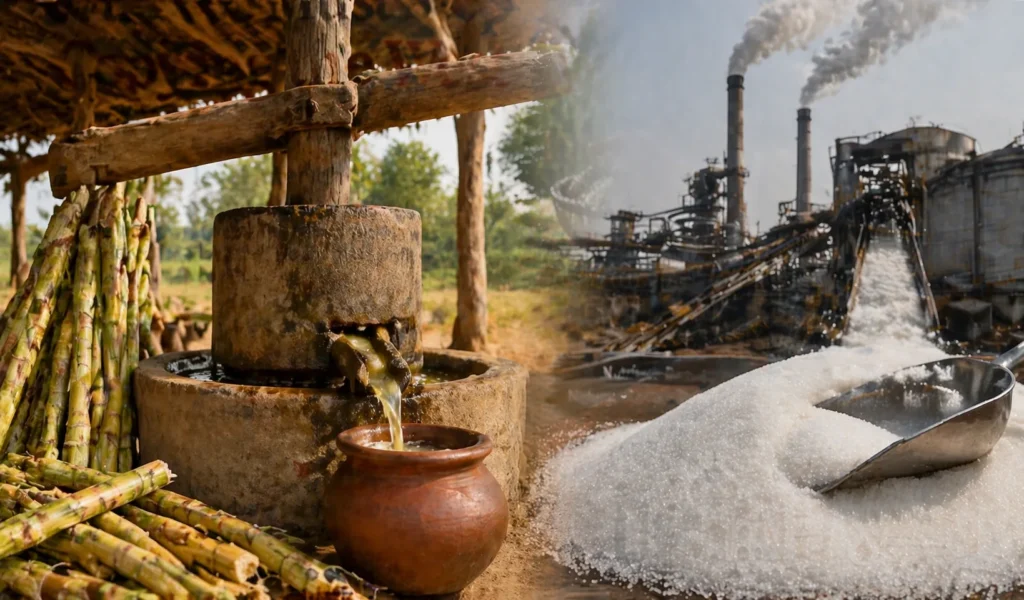
The shift began as industrial sugar mills replaced the local ghani (press). This refined sucrose was designed for a long shelf life and mass profit — not for human health. As these white crystals became a symbol of modernity, they pushed our nutrient-dense Gur and Shahad to the background.
We traded our biological heritage for industrial convenience. And as India’s understanding of types of diabetes, diabetes mellitus, and the growing burden of blood sugar disease has expanded, it becomes clearer that this trade came at a significant cost to national health.
Today, India is home to one of the largest diabetic populations in the world. Understanding what causes diabetes in the Indian context requires understanding this history — because the modern Indian diet is built on habits that were never ours to begin with.
Important Note: While Jaggery (Gur) and Honey (Shahad) are part of India’s medicinal heritage and are nutritionally superior to refined sugar, they still contain high amounts of sucrose/fructose. For individuals with diabetes, these will cause blood sugar spikes. DFN encourages Awareness of these traditional ingredients, but they should not be considered “safe” replacements for sugar without consulting your doctor.
This is only the beginning of the story. In Part 2, we will uncover how this modern habit created a unique challenge for the Indian body — and why Western health rules do not always apply to us.